
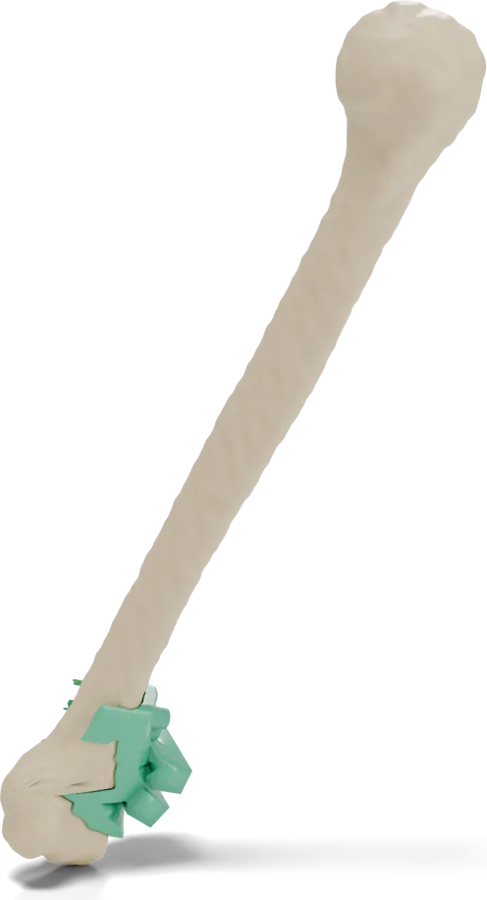
Cubitus varus
A closing wedge with converging slots and parallel pins, sized for a child's elbow.
Deformity and malunion
Opening and closing wedge osteotomies, malunions and paediatric deformity. You set the correction; the guide carries it into theatre.
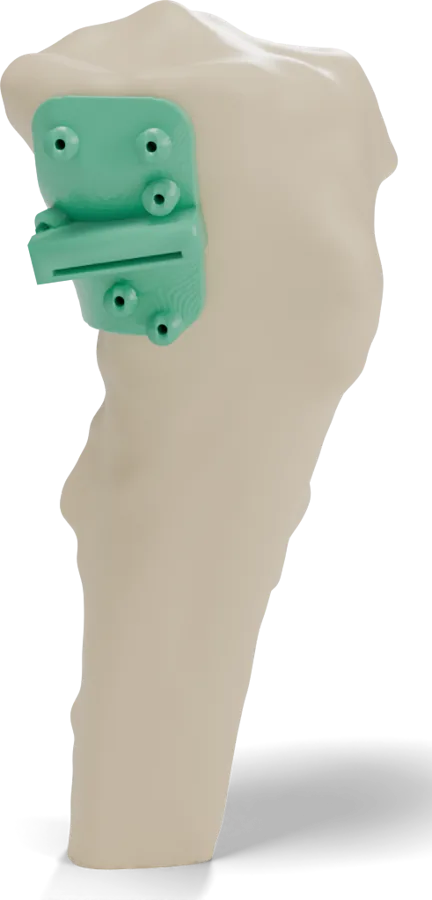
High tibial osteotomy
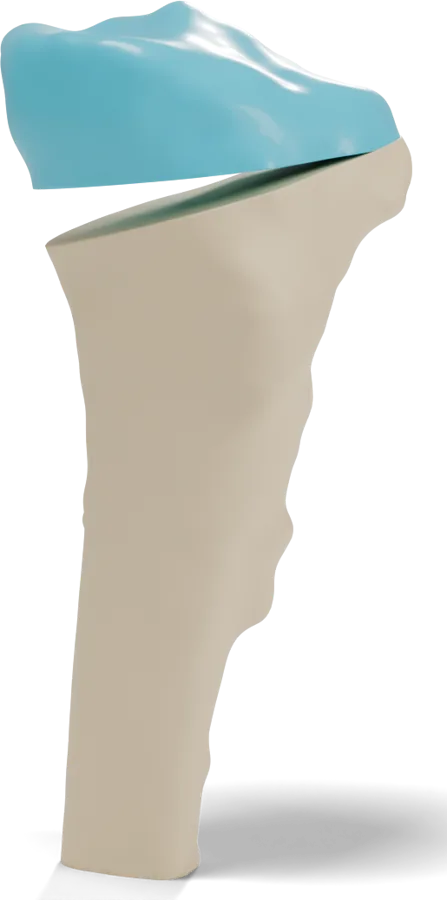
The correction comes from your standing long-leg film. We place the hinge in the safe zone below the lateral plateau, guide the oblique and ascending cuts, and set two wires that become parallel when the wedge is opened to plan.
| You send | Knee CT and the standing long-leg X-ray |
|---|---|
| You decide | Correction angle, opening or closing wedge, plate |
| You receive | Cutting guide, a bone model, and one plan sheet |
Also planned
A closing wedge with converging slots and parallel pins, sized for a child's elbow.
Tibial and femoral corrections in growing bone, with the growth plates kept clear.
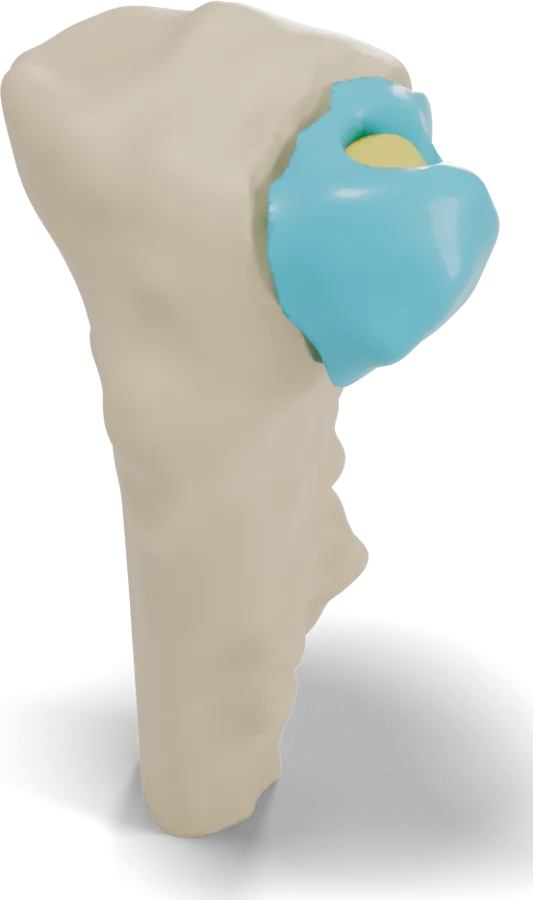
Forearm, distal radius and long-bone malunions corrected to the mirrored healthy side.
Evidence
mean difference between planned and achieved leg alignment with patient-specific guides for high tibial osteotomy.
Fucentese 2020, J Exp Orthop; 23 patientsmean deviation of the tibial correction from plan with a CT-based opening-wedge guide.
Rosso 2023, J Exp Orthop; in vitroSend the CT and the standing film. We reply within 24 hours with the plan, timeline and cost.